Showing posts with label peace of mind. Show all posts

Wednesday, 26 June 2013

How I found inner peace in Japan

Strange things happen when you travel to places like Mount Koya. If you don't watch out, you might just find serendipity in places you least expect.


By Nila Sweeney

A temple near Danjo Goran, Mount Koya

I knew this part of the journey would be very special. Why won't it be? I’d be staying in a Buddhist temple and I'd be able to sample, albeit in small doses, the monastic life.

What I didn’t expect was for my stay here to eclipse the heady experiences I've already had with the cherry blossoms and Mount Yoshino.

I thought things couldn't get any better. Well, Koya San, you proved me wrong!

Even with a few false starts in the morning, such as getting lost on my way down from the guest house because I thought I'd follow a different route (Yup, I know, I never learn), arriving in Mount Koya or Koya San made me instantly forget these niggly little things.
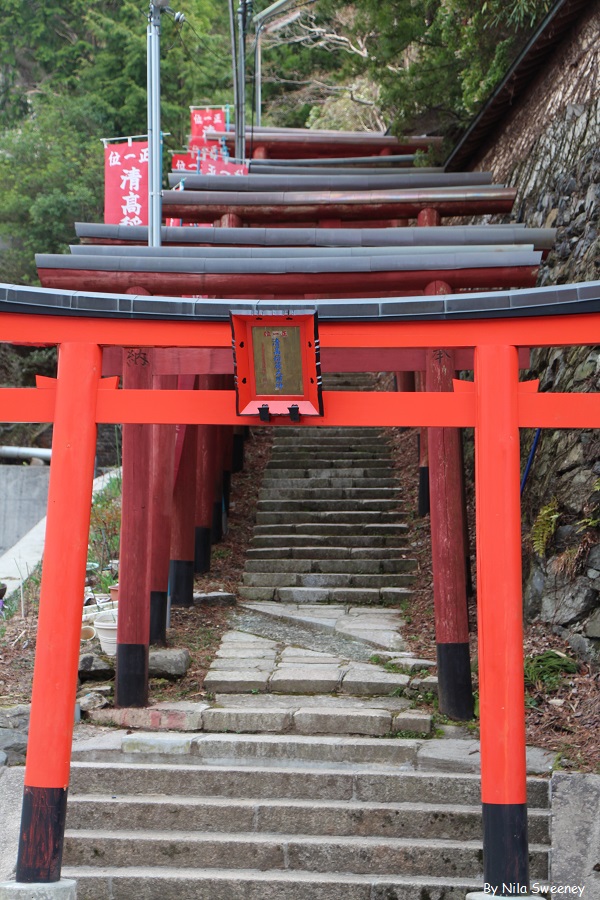
Temple near Okunoin

The place has mystical written all over it. The crisp spring air was colder and the town seemed to move in slow motion.

Koya San is certainly special. It's been recognised by UNESCO as a World Heritage Area and is the centre of Buddhist study and practice. As such, Koya San features a lot of temples, with a few offering accommodation to guests who want to experience a bit of monastic life.

You can walk around to explore the town, which seems to be the norm in Japan, although buses run regularly to take tourists from one end of the town to the other. I arrived well before the shukubo or Buddhist temple lodging opened for check in so I dropped my bags and started exploring the place.
 
Danjo Goran Temple, Mount Koya

First stop was Danjo Goran, a big red temple, which stood proudly in the middle of a large compound. A few of the monks were bustling about, preparing the temples for a festival of some sort. Inside was a different story altogether.

It was so quiet, you could hear a pin drop. The main hall featured a giant golden statue of the Buddha flanked by his disciples. The peaceful energy was palpable.

An elderly Japanese woman was praying quietly when I walked. She smiled and showed me how to do the offering. I wasn’t sure if I should, but I gave it a try anyway.

Perhaps the stillness of the place got to me, but I felt a wave of calmness wash all over me as I sat quietly, taking in the surrounding. I could feel my pulse and breathing slowing down considerably. It was an unfamiliar sensation after having been running on adrenalin at full speed.

Koya San does that to you. You just slow right down. I actually found myself walking slower and speaking softer than normal without even realising it.

I could have spent the whole afternoon there but I knew I had a limited time to explore the area before I headed back to Tokyo the next day. So I made my way to Dai Mon or Big Gate, featuring two fierce-looking deities guarding the town. With the sun shining brightly, I thought I'd fit in as many sights as possible.
 
Dai Mon, Mount Koya

Next stop was Okunoin, the most sacred site in Koya San where more than 200,000 monks, lay people, prominent people and royalties have been buried, some hundreds of years ago.
 
Okunoin, Mount Koya

I've seen the photos, but seeing it in real life was simply mind-blowing. The towering, centuries-old cedar trees sheltering the tombs with the sun's rays peeking in between them created such a glorious sight.
 
Ancient stupas in Okunoin

The graveyard, Japan's largest, also featured hundreds of stupas, some dating back several hundred years ago. Stupas are Buddhism’s sacred symbol of enlightenment.

At the centre of the graveyard was the mausoleum of Kobo Dashi, the founder of Shingon Buddhism in Japan, who is believed to be in eternal meditation since 835 AD.  

There was nothing morbid about the graveyard and I found myself happily spending the whole afternoon exploring the 2km stretch. The tranquillity of the place was infectious.

Without even noticing, I started thinking about my own transient existence and how I’ve been living my life. It was one of those moments when you’ve got nowhere to go but inside your head. It was confronting but liberating at the same time. I realised I’ve squandered a large chunk of my life living the way I did, but also joyful that I’m still alive to make things right. The setting was perfect for these kinds of contemplations.


Okunoin, Japan's largest graveyard

It was very tempting to stay longer, but it was starting to get dark so I decided to return to the temple where I’d be spending the night. I was warned by Lonely Planet that I should not be late for dinner which was to be served at 6pm. 

I arrived with plenty of time so I’ve decided to try out the much-raved about Japanese bath. I was a bit nervous but relieved that there was no one else when I got there. What followed was an out-of-this-world experience.

Buddhist temple lodging or shukubo

I didn't know what to expect, but the bath in this temple was above what I’d consider top notch. Everything was perfect and oh, so beautiful.

As I slowly slid into the large bath and felt the warm bubbling water on my skin, my brain just froze. I was totally lost in the moment. I lost the sense of time, place and self. The experience was so profound that I felt a sudden urge to cry and laugh at the same time. Perhaps I was just tired, but hey.

The bath left me feeling like a jelly when I emerged, 30 minutes later. I felt so light and fresh, with no care in the world. All the worries about work melted away. It was cleansing in more ways than one. I felt like a new person, inside and out.
 
My shukubo room. Simple yet elegant

As I staggered out of the bathing area and into my room, a monk asked if I wanted dinner served to which I said yes please. Within a couple of minutes, he came bearing not one, not two, but three trays of neatly presented traditional Buddhist feast!

 
Buddhist vegetarian feast

I was almost reluctant to eat them. They looked too perfect to touch, let alone eat. So I spent at least 10 minutes admiring the food and taking photos, as you would when presented with something this exquisite.

Don't know where to start! 

Best food I had in Japan

The food tasted as good as they looked. It's the best food I’ve had in Japan so far. As I tucked into this marvellous feast, I felt so much gratitude for the good fortune I have been given, to be here, right now.
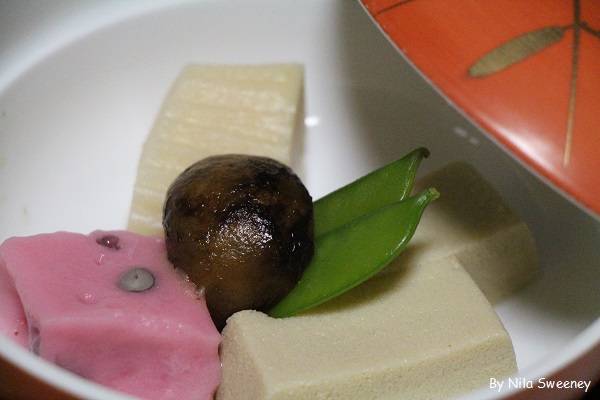
 
It tastes as good as it looks

Perfection in every way

I felt incredibly privileged to be able to experience all these wonderful things. 
Peace, it seems, had come to me, at last.


Sunday, 19 May 2013

A simple way to avoid disappointments forever


Living a fulfilled life could be as simple as doing more exploring and less expecting.

By Nila Sweeney


As I sit here writing about exploration, not expectation, I can’t help but feel a bit like a phony. Of course, I expect myself to come up with brilliant prose about this very subject.

It's ironic isn't it, how we set ourselves up for disappointments without even realising it. It's like an automatic setting in our brain. Every time we do something, we attach to it an expectation of a certain outcome, which prevent us from being open to other possibilities.

When we create expectations rather than exploring what’s possible, we close ourselves off from potential breakthroughs because our expectations dictate how we do things. We exclude other possibilities because we get so fixated with certain outcomes. We miss out on potential opportunities.

When we set expectations around people and ourselves, we're really not giving them, or us, for that matter, a chance. They have to be a certain way, or things should be this way or else...Yes, or else we judge it a failure.

Taking for example my yoga practice. Like many A-type personalities out there, I'm a very driven person. I want to be always at the peak of my game. I have to be able to do certain things well at all times. If not, then I judge myself as a failure because I couldn’t do certain things on certain days. Instead of focusing on being in tuned with my body just like what yoga intended, I'm more preoccupied about looking good and proving to myself and others that I can do it.

When we let our ego and desire run the show, we're setting ourselves up for disappointments or in the case of my yoga practice, injuries. We're limiting the potential outcome in a bid to control the results. When we let go of our need to control, when we soften our stance towards how things should be, when we let go of the shoulds and musts, we're opening ourselves to limitless possibilities and the joy of the unexpected outcome.

The joy of being an explorer

I love the word explorer, the same way I love the word adventurer. They connote so much excitement and uncertainties with just a hint of danger. I aspire to be one and I’m currently working on being an explorer and adventurer in my remaining life.


So I've experimented and tested the theory that you gain more by trying to let go of a preconceived outcome. I started to apply this to my yoga practice.

Rather than forcing my body to do certain poses, I start my practice with the intention of pushing myself to the edge to see how far I can take my practice, and at the same time be open to what comes up. While this may sound like I am still trying to control the outcome, the difference this time is that I do so with softness, openness and compassion to myself. This simple act of setting an intention works wonder in making my practice more enjoyable. I continue to grow and advance my yoga practice without forcing.

Finding the balance between effort and surrender comes as a result of exploring what my body can do. It’s about knowing when to push it to the limit and knowing when to pull back. When I go through my practice without 'forcing' it, I often come away more satisfied with myself. When I discover that my body can do certain things,  it becomes a celebration. It's no longer a yardstick by which I measure myself worth.

I now apply the same principle with my dealings with other people. I used to create certain expectations around my relationships with them and consciously or unconsciously, I act, driven by those expectations. Rather than be open to other possibilities, I sometimes “manipulate” the outcome by some sneaky tactics such as applying pressure onto the other person. Rather than going with however the relationship is meant to be at that point, I ‘force’ the outcome, sometimes to the point of threatening the other person to commit or do things or else I banish them from my life.

Now when I’m with others or meeting people for the first time, I consciously drop all my preconceptions and judgement. I go with an open and curious mind and be open to how things will turn out. When I treat the encounter as an adventure, there was no way for me to lose, only reap the reward of meeting another human being.

Being an explorer is a more fun way to live. It allows you to see things differently. You are in constant discovery. You see things you’d otherwise miss because you were not looking for a specific outcome. You’re open to anything. Suddenly the world becomes your oyster.

Adopting a beginner's mind

There’s something exciting about being a newbie. The rush of discovering something new is a wonderful feeling. Your mind is ready to soak up and learn new things. It prompts curiosity and adventure.

Remember when you’re young and raring to learn anything? I remember the first time I worked in a newsroom. Being a civil engineering graduate and has no previous work experience in television journalism, being thrown in the deep end as a news assistant is the most-nerve wracking yet immensely exciting experience. I was so excited; I was literally jumping out of my skin. I felt so alive. It was a sink or swim situation. So I approached the challenge with open mind and heart and learned everything that I could within the shortest possible time.

I asked a lot of questions, I asked for help. I had no expectations about myself. I treated the challenge as pure exploration and self-discovery: to see if I have what it takes to make it into television journalism. Of course I pushed myself to the limit. There was no way I would not give this opportunity my best shot. But I did it with the attitude that I have no control of the outcome and therefore deliberately didn’t set any expectations. I worked hard and learned everything that I could, out of gratitude for this life-changing opportunity.  Needless to say, I made it and ended up working in broadcasting for about 10 years. I worked my way through to associate produce/writer position at CNBC Asia and then later at CNN International.

Being a beginner can be quite scary, because it exposes our lack of knowledge or expertise in certain areas. But rather than looking at it as a weakness, a better approach will be to look at it as a great opportunity to learn new things and skills. It’s when we’re learning new things and new way of doing things that we grow as human beings.

Adopting a beginner’s mind in everything that we do help us to relax and explore. Our interaction with others becomes more meaningful. When we treat each encounter as a chance to explore, we open ourselves to anything. When we simply explore and not expect anything, we save ourselves unnecessary disappointments. We become a happier, more content human being.