Wednesday, 17 July 2013

How to snap out of negative mindset quick

“You become what you think about all day long.”  Earn Nightingale


I just had one of those days. You know the ones when nothing seems to be working? When everything you touch breaks and all the problems in the world seem to drop in your lap in one giant heap? Yes, I had one of those days today.

At times like these, it would be so easy to succumb to pointless wallowing in self-pity, thinking that I have the worst situation in the whole world. It would be normal for me to engage in futile ruminations of the things I could have done, should have done and would have done, knowing fully well that I could not undo the past. 

But not today. Admittedly, I allowed myself to indulge, albeit briefly, in this negative mindset today. But as soon as I started seeing the warning signs: I'm unable to focus, I'm getting increasingly irritable and starting to breathe erratically, I knew I had to snap out of the funk. 

It’s all too easy to get carried away by the negativity when you’re facing a difficult situation such as losing your home due to financial difficulties. Or when the love of your life cheated on you and left you for someone else. You may feel depressed and helpless when you've lost your life-saving to someone who took advantage of your trust. At times like these, it may seem impossible to dig yourself out of the slump.

The good news is, we can snap ourselves out of this negative state quicker than you realise. Here’s how I get out of the funk quick and how you can do it too.

1. Find something that makes you laugh, real belly laugh. 

There are millions of websites dedicated to humour and funny posts dominate Facebook. Allow yourself a few moments to enjoy something funny. Laugh hard. Laughter immediately helps in diffusing the negative energy and floods your body with endorphin. 

Yes, I know it’s hard to laugh when you’re suffering, but keep trying. Before you know it, you’d be laughing uncontrollably, probably at the silliness of taking yourself and situation too seriously.

2. Notice the stories that you're telling yourself as you try to deal with your problems. 

Are you blaming yourself? Are you berating yourself for being ‘weak, stupid and lazy’ for allowing this problem to happen?

All too often, we judge ourselves harshly compared to others. We beat ourselves up and subject ourselves to endless torture because we think we're not good enough and therefore don't deserve to be happy.

Realise that these are just stories. You made them up and therefore, you have the ability to un-make them. You can stop and change the story line altogether. 

You are not weak or stupid. You may have made the wrong decision, but this is not a proof you are not smart enough. 

3. Look for things to be grateful about. 

When we’re facing a multitude of problems, it may be difficult to see the bright side. But they are there if you look hard enough.

You can be grateful for the fact that you’re in good health and living near the people you love. You can be thankful to live in a country where you can enjoy peace and freedom. Despite your current problems, you still enjoy the good fortune of earning more than enough to live on. You have a roof over your head and food on the table. 

You can even be grateful for the problems you are now experiencing. Without these challenges, we cannot grow as people. It makes us stronger and wiser. 

Here’s a beautiful poem I turn for inspiration when I’m facing a difficult situation.

Be thankful

Be thankful that you don’t already have everything you desire,
If you did, what would there be to look forward to?

Be thankful when you don’t know something
For it gives you the opportunity to learn.

Be thankful for the difficult times.
During those times you grow.

Be thankful for your limitation
Because they give you opportunities for improvement.

Be thankful for each new challenge
Because it will build your strength and character.

Be thankful for your mistakes
They will teach you valuable lessons.

Be thankful when you’re tired and weary
Because it means you’ve made a difference.

It is easy to be thankful for the good things.
A life of rich fulfillment comes to those who are
also thankful for the setbacks.

Gratitude can turn a negative into a positive.
Find a way to be thankful for your troubles
and they can become your blessings.
~ Author Unknown ~

Remember that no one is hopelessly condemned to eternal misery, unless you allow yourself to be. There’s always a way out of the problems we face in this life. It may not be readily apparent today, but troubles will soon pass. And you smile again.


Wednesday, 10 July 2013

How to ensure you finish what you started no matter how much you want to quit

Struggling to finish what you started? These tips might help.

By Nila Sweeney


I’ve been known to start off big on projects, lose interest halfway and rarely get to finish what I started. Indeed, I’ve been known to peak too soon.

Things changed when I started using these two exceedingly simple yet practical strategies. Each time I’m stuck on a project or starting to lose enthusiasm, I tap into these two simple steps. They work every time. You may want to give it a try too.

Start small and recognise your small victories

I know you’ve known this all along. But admit it or not, we tend to bite more than we could chew when we embark on a project.

We want to escape the part where we’re not amazing yet so we go full on in the beginning so that we can be amazing already. The predictable outcome is the we lose interest when things don't go according to plan.

By starting small and setting ourselves smaller goals that we can measure, we’re able to see and track our progress.

Sometimes it’s not always easy to spot or recognise our victories because we’ve got in our heads that success has to be earth-shattering and anything less would not be worth celebrating.

That’s why a lot of aspiring entrepreneurs quit half-way down the road because they feel they’re not achieving their goals fast enough or as fast as the others, even though they have already made significant progress.

But success also comes from our triumph over small things that accumulate over time. It’s about getting better at the things we set out to do each time. It’s a result of taking action, a step, no matter how small, to bring us closer to our goal.

The power of starting small is even more evident in my yoga practice. When I first started taking yoga lessons, I was quite discouraged by the fact that I can’t even reach my shin when I do forward bend. I was so stiff. But my kind Iyengar teacher kept assuring me that I, too, will be able to touch the floor one day.

Although I didn’t see how that was possible in the beginning, I stuck it out, with my teacher's guidance, gently easing into my practice rather than forcing my body into submission. Each time I went to my yoga class, I set an intention to push my practice just a little bit harder and enjoyed even the smallest improvement that I made. 

It happened sooner than I expected, although by this time, touching the floor was no longer my primary motivation for practicing yoga.

When you’re struggling to get motivated to finish your project or get to your goal, it’s helpful to see the big picture and where you are at in the process. Look at your situation, your depth of knowledge, your confidence, your fitness level, your well-being and then compare this when you’ve just started, or even just a year ago. Have you become more decisive? Have you become more knowledgeable and confident? Have you become healthier and happier? These are all achievements worth celebrating.

Sure, you should always aim to fulfil your lofty goals, but the only way to sustain and motivate yourself to get to the end is by celebrating every little victory you achieve along the way.

Pre-commit

Another fail-proof strategy to ensure success is to agree to do something that would help your cause. Most importantly, you make it in such a way that it would be near impossible for you to back down.

This works because you're essentially not giving yourself a chance to renege on your commitment because the consequences would be costly.

So how do you pre-commit? There are a few ways you can do it.

If you’re trying to quit a habit, remove the temptation that will cause you to relapse. If you’re trying to give up smoking, for example, don’t carry cigarettes. If you’re trying to lose weight, don’t buy chips.

On the other hand, if you’re trying to develop a habit, say exercising or practicing yoga regularly, pre-commit to work out that day by packing your gym gear to work. Because you’ve already gone through the trouble of packing your workout clothes, you’re likely to be motivated to use them.

Another very effective way is to pay for a class, a seminar, a personal training or coaching session that is not refundable. When you know you can’t take your money back, you’re likely to show up.

You can also get someone to ‘police’ your progress to ensure you do what you’ve pre-committed for. This can be in the form a coach or a mentor or someone you trust to keep you accountable.

To take this even further, you can set it up so that you get penalised by a certain amount each time you lapse. The amount needs to be big enough for you to feel the ‘pain’ when you pay your coach or friend. A good start would be $50 each time you miss your training session, you ate that extra piece of cake or didn’t meet your target.

The point is, if we don’t give ourselves the opportunity to back out, we’re likely to stay the course and achieve our goals.


Monday, 8 July 2013

How to make that leap even when you're scared

If you’re finding it difficult to make the ultimate leap towards your dream no matter how much time you’ve prepared yourself, these might help.


By Nila Sweeney


Perhaps you're thinking of starting your own business. Maybe you want to change career or go back to work after taking a long break. Maybe you're dreaming about travelling the world, taking your relationships to the next level, or ending the current one you're in.

You’ve been diligently preparing yourself. But then even after spending a lot of time getting ready, you're still unable to make the crucial next step.

You know you need to act and desperately want to take the plunge. But how?

Here are three simple steps that might help you finally make that leap.

Acknowledge your fear.

There’s no getting around this first step. Until you admit to what you’re feeling, whether its anxiety or fear, you won’t be able to get to the bottom of what’s really causing it. There’s no point ignoring your fear because it’s bound to resurface when you least expect it.

Remember, what you resist persist.

It’s helpful to see fear and anxiety for what they really are: feelings that are fleeting. They come and go. You don’t have to fear them or avoid them at all cost. Learn to sit with them. Embrace them. Make them your best friend. Since they’ve been with you all this time, they’re likely to stick around for awhile more.

Realise that perhaps you’re more afraid of the feeling of fear rather than fear itself. If you can be with your fear or anxiety long enough to understand that they’re just feelings, you’ll be able to move on to the next step.

Find out what’s causing this fear.

Ask yourself, is starting your own business or travelling the world really such a dangerous thing? Actually, it’s not. There are far riskier things you could be doing right now.

So what are you really afraid of? Make a list. I can hear you grumbling. Not another list! I can assure you, this works.  Try it.

Putting things into writing really helps in clarifying your thoughts by understanding the root of your fear and anxiety. 

You might find that what you’re really afraid if is not about losing money. Perhaps it’s more to do with not meeting the expectations you set upon yourself. Perhaps you're afraid of failing. Perhaps you created this elaborate fantasy that you should make tens of thousands of dollars in your first venture. Recognising that these are just fantasies will help you realise just how much you’ve glorified your fears.

Once you get to the bottom of what’s really causing your fear, you can now let it go and take the next step.

Focus on what you gain by letting go of your fear.

What would it look like if you let go of your fear? Would you gain the juiciest relationship? Peace of mind? Would you gain adventure or financial freedom?

Focusing on what you gain makes it easier for you to let go of your fears. It enables you to see how your fears make you procrastinate and miss out on all these available opportunities.   
As you loosen your grip to your fear, you’d find that it also slackens its grip on you. You can now go through any perceived obstacles with confidence; knowing that you largely created them and therefore, you do have the power to banish them.

Now, take a deep breath and jump!


Friday, 28 June 2013

How to bounce back from failure

Nobody wants to fail, but we still do, from time to time. Here are 4 tips to help you get back in the game, fast.

By Nila Sweeney


I don’t like failing. Failing sucks and it’s painful. It weighs you down and makes you just want to give up. Unfortunately, despite my best efforts, I failed many times and I still fail in some of the things I set out to do.

For example, I set out a goal to do yoga every day. I do it most days, but not every day as I aimed for.

I still procrastinate. I aimed to be more decisive and productive, but I still put off doing things or making crucial decisions. Sometimes for days. No wonder, I'm still nowhere near the size of the property portfolio I need to retire on.

I wanted to be organised particularly with paperwork, but my bills and other important documents are still piling up in the box under the bed for me to sort out.

I had many failures in the past, including losing money on ventures that bombed and getting involved in relationships that were doomed from the start.

There were many occasions I was tempted to just throw in the towel. And I did, a number of times, albeit briefly. Somehow I keep finding myself back in the game.

It’s never easy to motivate yourself when you fail, but there are steps you can take to get you out of the rut quicker. Here are four tips that I use to pick myself up after a humbling defeat. You may want to give it a try too.

1. Take a short break to refocus
Taking a short break to regroup helps you to see things clearly. When we fail at something, we have the tendency to magnify its impact. We think the fall out is bigger than what it actually is. And it could be really big, but if you look at the grand scheme of things, you’ll likely to see it’s not that serious. It's not insurmountable. It’s not the end of the world. You can only do this if you take time to refocus.

The other benefit of taking a breather is that you avoid knee-jerk reactions that could exacerbate the damage. Dealing with failure is uncomfortable and it’s normal to want to make the discomfort go away as fast as possible. If you're not aware of your actions, you could end up making riskier moves that would compound your loses.

2. Don’t take it personally
Easier said than done, I know. There’s a big difference between failing at something and failing as a person. When we fail in our ventures or projects, we tend to take it personally. We make it mean we’re failures. We think we failed because we're not good enough, that we're stupid or losers.

When you had a lapse and ate a whole block of chocolate for example, this doesn’t mean you’ve failed as a person. It just meant that you broke your diet, a sign that something in your method is not working.

When you bought an underperforming investment, it means your methods were flawed, not you as a person. It doesn't mean you suck as an investor.

When we just see failure as it is: a sign that a process is not working, we'll be able to find a way to improve it to prevent it from happening again.

3. Change the way you do things
Once you’ve identified the ineffective ways of doing things that led to this failure, you can  change it. You can look for a new or different method of doing it. Maybe ask other people for help. Maybe set up a system to keep you accountable. Maybe you need to overhaul your whole process of doing things. The important thing is that you’re making a distinction between the failure of the methods and your failure as a person.

4. Take action, no matter how small
Failure makes you want to stop and just crawl under the bed and never get out. It’s tempting to quit and not do anything. But this will only postpone the inevitable: dealing with the consequences of that failure.

When you take action, no matter how small, you’re sending a message to yourself that this failure that you’re dealing with is not insurmountable. You start feeling better. 
Before you know it, you’re back in the game.

You may also want to read my article Are you still making excuses? for an extra dose of motivation. 

Other inspirational articles you may want to check out:
Could this be the missing magic ingredient in your relationships?
No time to lose 

Wednesday, 26 June 2013

How I found inner peace in Japan

Strange things happen when you travel to places like Mount Koya. If you don't watch out, you might just find serendipity in places you least expect.


By Nila Sweeney

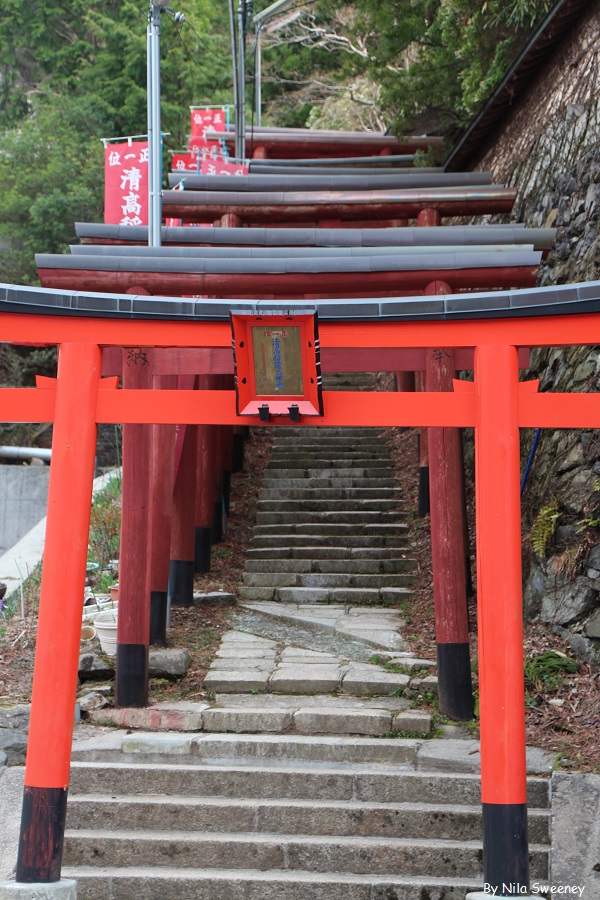
A temple near Danjo Goran, Mount Koya

I knew this part of the journey would be very special. Why won't it be? I’d be staying in a Buddhist temple and I'd be able to sample, albeit in small doses, the monastic life.

What I didn’t expect was for my stay here to eclipse the heady experiences I've already had with the cherry blossoms and Mount Yoshino.

I thought things couldn't get any better. Well, Koya San, you proved me wrong!

Even with a few false starts in the morning, such as getting lost on my way down from the guest house because I thought I'd follow a different route (Yup, I know, I never learn), arriving in Mount Koya or Koya San made me instantly forget these niggly little things.

Temple near Okunoin

The place has mystical written all over it. The crisp spring air was colder and the town seemed to move in slow motion.

Koya San is certainly special. It's been recognised by UNESCO as a World Heritage Area and is the centre of Buddhist study and practice. As such, Koya San features a lot of temples, with a few offering accommodation to guests who want to experience a bit of monastic life.

You can walk around to explore the town, which seems to be the norm in Japan, although buses run regularly to take tourists from one end of the town to the other. I arrived well before the shukubo or Buddhist temple lodging opened for check in so I dropped my bags and started exploring the place.
 
Danjo Goran Temple, Mount Koya

First stop was Danjo Goran, a big red temple, which stood proudly in the middle of a large compound. A few of the monks were bustling about, preparing the temples for a festival of some sort. Inside was a different story altogether.

It was so quiet, you could hear a pin drop. The main hall featured a giant golden statue of the Buddha flanked by his disciples. The peaceful energy was palpable.

An elderly Japanese woman was praying quietly when I walked. She smiled and showed me how to do the offering. I wasn’t sure if I should, but I gave it a try anyway.

Perhaps the stillness of the place got to me, but I felt a wave of calmness wash all over me as I sat quietly, taking in the surrounding. I could feel my pulse and breathing slowing down considerably. It was an unfamiliar sensation after having been running on adrenalin at full speed.

Koya San does that to you. You just slow right down. I actually found myself walking slower and speaking softer than normal without even realising it.

I could have spent the whole afternoon there but I knew I had a limited time to explore the area before I headed back to Tokyo the next day. So I made my way to Dai Mon or Big Gate, featuring two fierce-looking deities guarding the town. With the sun shining brightly, I thought I'd fit in as many sights as possible.
 
Dai Mon, Mount Koya

Next stop was Okunoin, the most sacred site in Koya San where more than 200,000 monks, lay people, prominent people and royalties have been buried, some hundreds of years ago.
 
Okunoin, Mount Koya

I've seen the photos, but seeing it in real life was simply mind-blowing. The towering, centuries-old cedar trees sheltering the tombs with the sun's rays peeking in between them created such a glorious sight.
 
Ancient stupas in Okunoin

The graveyard, Japan's largest, also featured hundreds of stupas, some dating back several hundred years ago. Stupas are Buddhism’s sacred symbol of enlightenment.

At the centre of the graveyard was the mausoleum of Kobo Dashi, the founder of Shingon Buddhism in Japan, who is believed to be in eternal meditation since 835 AD.  

There was nothing morbid about the graveyard and I found myself happily spending the whole afternoon exploring the 2km stretch. The tranquillity of the place was infectious.

Without even noticing, I started thinking about my own transient existence and how I’ve been living my life. It was one of those moments when you’ve got nowhere to go but inside your head. It was confronting but liberating at the same time. I realised I’ve squandered a large chunk of my life living the way I did, but also joyful that I’m still alive to make things right. The setting was perfect for these kinds of contemplations.


Okunoin, Japan's largest graveyard

It was very tempting to stay longer, but it was starting to get dark so I decided to return to the temple where I’d be spending the night. I was warned by Lonely Planet that I should not be late for dinner which was to be served at 6pm. 

I arrived with plenty of time so I’ve decided to try out the much-raved about Japanese bath. I was a bit nervous but relieved that there was no one else when I got there. What followed was an out-of-this-world experience.

Buddhist temple lodging or shukubo

I didn't know what to expect, but the bath in this temple was above what I’d consider top notch. Everything was perfect and oh, so beautiful.

As I slowly slid into the large bath and felt the warm bubbling water on my skin, my brain just froze. I was totally lost in the moment. I lost the sense of time, place and self. The experience was so profound that I felt a sudden urge to cry and laugh at the same time. Perhaps I was just tired, but hey.

The bath left me feeling like a jelly when I emerged, 30 minutes later. I felt so light and fresh, with no care in the world. All the worries about work melted away. It was cleansing in more ways than one. I felt like a new person, inside and out.
 
My shukubo room. Simple yet elegant

As I staggered out of the bathing area and into my room, a monk asked if I wanted dinner served to which I said yes please. Within a couple of minutes, he came bearing not one, not two, but three trays of neatly presented traditional Buddhist feast!

 
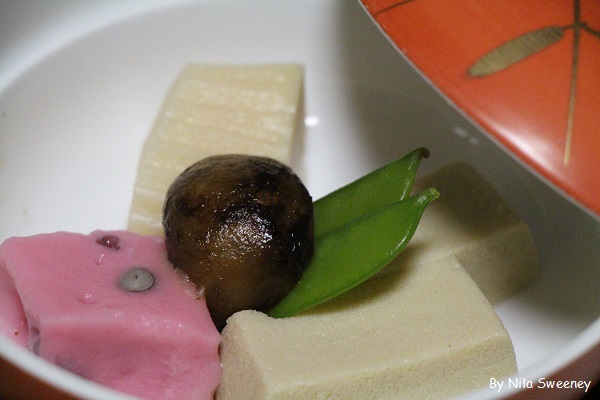
Buddhist vegetarian feast

I was almost reluctant to eat them. They looked too perfect to touch, let alone eat. So I spent at least 10 minutes admiring the food and taking photos, as you would when presented with something this exquisite.

Don't know where to start! 

Best food I had in Japan

The food tasted as good as they looked. It's the best food I’ve had in Japan so far. As I tucked into this marvellous feast, I felt so much gratitude for the good fortune I have been given, to be here, right now.

 
It tastes as good as it looks

Perfection in every way

I felt incredibly privileged to be able to experience all these wonderful things. 
Peace, it seems, had come to me, at last.


Thursday, 20 June 2013

Still making excuses? Now you can stop with these 4 simple steps

We know excuses hold us back. Yet we all make them. Here’s how to get rid of this self-limiting habit once and for all.


 By Nila Sweeney


I’m full of excuses. At least I used to be.

I had a lot of excuses for the bad decisions that I’ve made in the past. I had a long list of excuses for my bad behaviour and certainly made excuses when things went wrong. Of course I also had many reasons for not doing the things that I’m passionate about.

I used to believe that if I had an excuse, then I didn’t have to be responsible. I could get away with anything. And I did get away with a lot of things.

But I also paid a big price. Because I was too busy making all these excuses, I didn’t learn from my mistakes. I kept making them over and over again. I’ve wasted many precious opportunities to improve myself and my situation.

I was stuck in a rut, which is not exactly the kind of life I dreamed about.

I wanted an extraordinary life where I’d be doing what I love while making a difference to others. I didn’t want a life where I was just getting by.

So I knew my excuses had to go. Once I made the decision to let go of my excuses, I was able to focus on actually doing what I'm passionate about. I've been a happier person as a result of taking action instead of hiding behind my excuses.

Here's how I banished my excuses and how you can do it too.

Get clear about what’s important to you.
Once I got clear about what I want in my life and what’s important to me, I was able to see my excuses for what they really are: obstacles in my path to living my dream.

Once I realised just how much my excuses have been running the show and preventing me from living a fulfilled life, it was easier to let them go.

You can do it too. Ask yourself, what excuses have you been telling yourself and others for not pursuing your dreams? Why are you holding on to these excuses? Are your excuses more important than living the life you want?

Realise that having an excuse is not a substitute for taking action.
If you missed a deadline for example, having an excuse doesn’t make up for the fact that you missed it. You’re still late. You still have to bear the consequences, like it or not.

If you want to travel but always have an excuse not to do it, you’re still stuck in wishful thinking territory. You’re still not going anywhere.

If you want to start an exercise regime but always finding an excuse not to do it, you’ll still end up in poorer health despite your excuses.

Until you realise that your excuses are not substitute for taking action and responsibility, you’ll always be stuck. You would continue living a comfortable, but pretty ordinary life.

Take responsibility.
I’ve used my excuses to get out of owning up to my mistakes. I’ve also used it to justify my actions, no matter how damaging they were.

When you take responsibility instead of making excuses you'd find solution to your situation. It compels you to take action.

Realise just how much your excuses are hurting you.
Holding onto your excuses is pretty twisted. Yet we do it because it's an easy way out.

But if we’re really honest about it, we can see how it’s hurting us. Our excuses are holding us back. They prevent us from reaching our potential and living a fulfilled life.

Next time your excuses crop up, remember to see them for what they really are: ineffective and damaging habits that are obstructing your way.

Once you stop believing in your excuses, you can start living your life.

Please feel free to share with others. You may also want to read How to bounce back from failure.


Friday, 14 June 2013

Random plans, cherry blossoms and disappearing crowd

High Drama in Mount Yoshino

A dream trip took an unexpected turn when I decided to follow the path less travelled.

By Nila Sweeney

Mount Yoshino

Waking up at 5:30am, my day was wide open. So many temples to see, so many cherry blossoms to view. What shall I do today, I asked myself  as I checked the weather forecast.

I wanted to make a quick plan on how to tackle Kyoto today. Apparently, one doesn’t just show up in Kyoto.

Over breakfast of two very thick slices of white bread and a sad-looking fried egg, I brainstormed with my roommates; a German girl named Meike and a French girl whose name I didn’t quite catch.

I thought about going to the bamboo forest, which was about 45 minutes from Kyoto, but then I remembered the crowd I encountered the day before. Do I really want to bump into so many pushing and shoving tourists today? The thought of it made me recoil a bit.

There was another option: Mount Yoshino, which boasts 30,000 cherry blossoms - the ultimate destination for a cherry blossom junkie like me. It was a no-brainer.

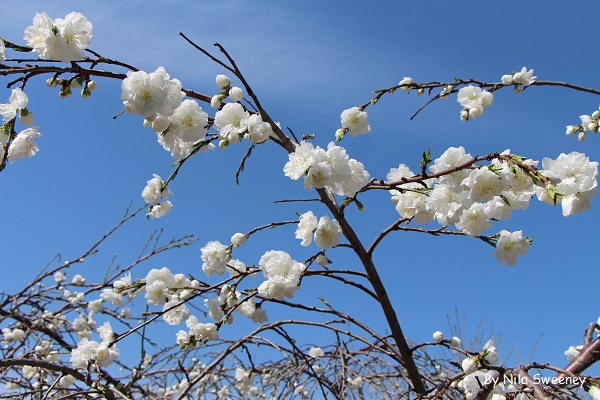
Cherry Blossoms On Mount Yoshino

The two-hour train ride to get to Mount Yoshino was quite pleasant. The announcements were all in Japanese, but I understood a lot of the words and the accent, so I knew when my train stop was coming next. It was nice to leave the mob behind.

As soon as I arrived in Mount Yoshino, I took the bus halfway up the mountain to give me a head start. It was all uphill, but what a view! The sight of the thousands of cherry blossoms clustered along the top of the mountain was simply stunning. Funnily, they look like a bald patch from afar.


30,000 Cherry Blossoms on Mount Yoshino


There were some tourists too, but nowhere near as many as Kyoto so there was no chance of elbowing someone off their place so you can take that perfect shot.


Mount Yoshino

I lingered at the mountain top for another half hour and then decided to make my way down when the heat got too much. It was a bright and sunny day. Just the perfect day to be in Yoshino.

I could hear the bus announcer from a distance, so I thought I'd just follow the sound. However, my curiosity got the better of me so I followed a different route and I ended up in the main village. 

It wasn't a wasted effort because the village itself was fascinating. I wandered around for a few minutes before asking an elderly gentleman for direction to the nearest bus stop. 


While the helpful gentleman was giving me directions, I saw from the corner of my eyes that the train station was 4.6 km away.  I asked him if there was a shortcut to the bus station. He said yes, and pointed me to a road going downhill. It looked right so I followed it. After walking uphill over the past hour and half, I was ready to take the easier way down. My legs were starting to fatigue at this point.

When I first started my trek down the mountain, there were a lot of people walking in the same direction. Then, they became fewer until I was the only one walking down the isolated road. I looked around but there was no one else.  It was eerily quiet.


The long way back to the train station

I wasn’t worried during the first 2 km. The scenery was so captivating I forgot that I was on my own in the middle of Yoshino. However, after walking alone for an hour, I started to wonder if I was lost. My eyes also started playing tricks on me at this stage. At one point I thought I saw the top of a bus, only to find out it was actually an abandoned building. 

I started to worry a little, and contemplated calling my friend Tomoko to send in a rescue party. I quickly checked if my phone has reception. Nothing. Oh dear.


Alone in the middle of Yoshino

Then, out of nowhere, an old woman, probably in her late 60s, appeared behind me, and walked briskly past me. Where did she come from? I didn't hear anyone walking behind me. I nervously looked around to see if there were others. None.

I tried to catch up with her and asked if I was in the right direction to the bus station. She just laughed. She told me in Japanese that I’d just have to keep walking. Then I lost her.

At this point I was really worried. Was she for real or was I just imagining her? I walked faster, almost running down the mountain as the sun started to set. I desperately wanted to see a lot of people. Then I chuckled at the irony of that thought as I started to sprint.

To my relief, the sign I was looking for appeared just around the bend: the train station!

I was so happy to finally get back to civilisation. I’ve never been happier to see so many people again. I jumped into the first train back to Kyoto, even if I have to pay another $10 for the ticket.

As I sat on the train, I was quietly laughing at my adventures today. I wanted to escape the crowd and got my wish. I also got to see one of the most breath-taking sights I've seen so far in Japan. What else could I ask for?